

How Stainless Steel Pipe Manufacturers in India Are Tested Before Dispatch?
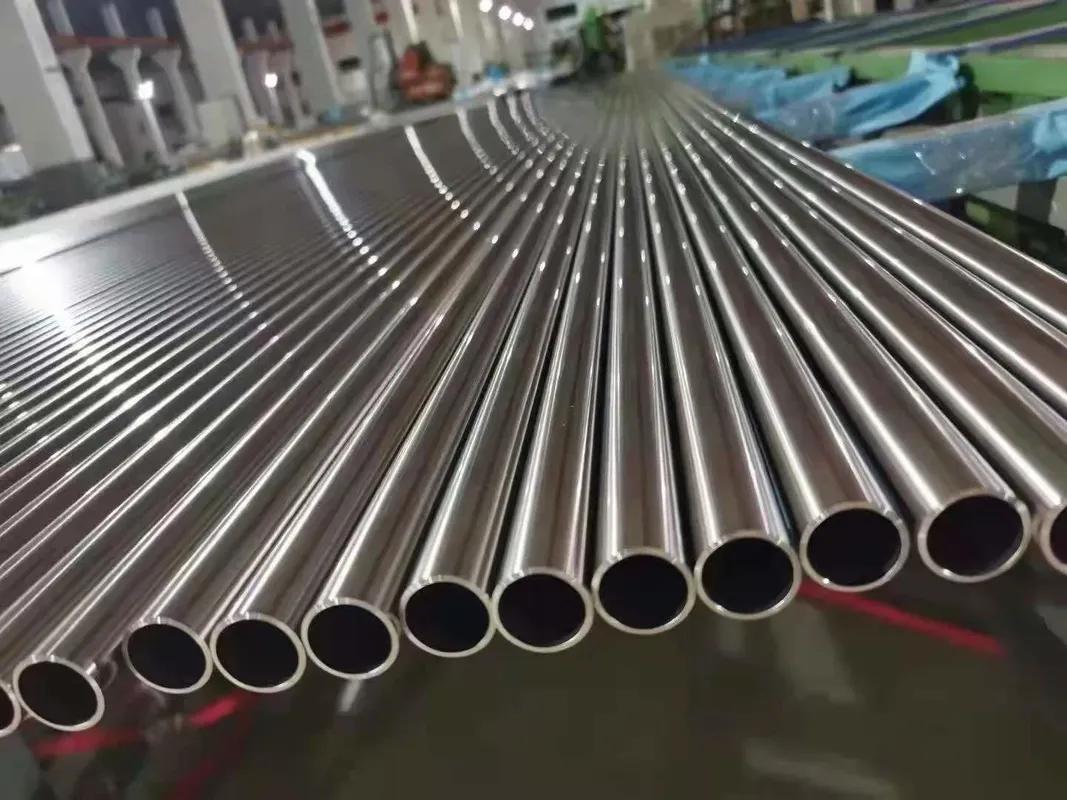
As a stainless steel pipe comes out of the factory, it's expected to face a multitude of challenges: high pressures, corrosive chemicals, extreme temperatures and years of service. The only way to be confident of that is testing, and plenty of it. A good Stainless Steel Pipe Manufacturer in India does not consider testing as a final step to check. It is integrated throughout the production process, from the arrival of raw material through to the time pipes are packed for shipment. Let's take a look at what the process usually entails, and what a buyer can expect to see.
Why Testing Matters So Much
What may appear flawless in a pipe may fail under stress, such as a weak weld, the wrong chemical composition, or tiny cracks that can grow over time. For sectors such as oil and gas, pharmaceuticals and power generation, the consequences of a failure can include downtime, safety hazards and costly repairs. These problems are discovered in the factory, where they can be remedied at a much lower cost than in the field.
Stage 1: Raw Material Verification
Quality starts before production does. When stainless steel coils, billets, or sheets arrive, they're checked to confirm they match the grade ordered.
Chemical analysis – Often done with a spectrometer, this confirms the levels of chromium, nickel, molybdenum, and other elements match the grade specification (such as 304 or 316)
Material certificates – Incoming material should come with its own test certificates from the steel producer, which are cross-checked against in-house results
This is the first step because if the material is not right, then whatever is built on it will not be right.
Stage 2: In-Process Inspection
As pipes are being formed, welded, or drawn, inspectors monitor critical areas to detect potential issues early, not at the end.
Dimensional checks – Outer diameter, wall thickness and straightness are measured against required tolerances.
Weld monitoring – For welded and ERW pipes, the weld seam is watched closely, since this is where problems are most likely to appear
Heat treatment control – Annealing temperatures and times are monitored so the pipe ends up with the right mechanical properties and corrosion resistance
Stage 3: Mechanical Testing
Once pipes are formed, samples are tested to confirm they're strong enough for their intended use.
Tensile test – Measures how much pulling force the material can handle before it breaks
Yield strength test – Shows the point at which the material starts to permanently deform
Hardness test – Confirms the material falls within the acceptable hardness range for its grade
Flattening and flaring tests – Check how the pipe behaves when squeezed or expanded, which reveals weaknesses in the weld or material
Bend test – Confirms the pipe can be bent without cracking
Stage 4: Pressure and Integrity Testing
These tests determine if the pipe is capable of carrying what it is meant to carry.
Hydrostatic test – The pipe is filled with water and pressurized to a specified level to check for leaks or weak spots
Eddy current testing – Non-destructive technique that identifies surface and near-surface defects through the use of electromagnetic fields.
Ultrasonic testing – Sound waves are used to find defects in internal parts, particularly welds and thicker walls.
Pneumatic test – In some cases, air pressure is used to check for leaks
One benefit of non-destructive methods is that they allow a manufacturer to test pipes without destroying them.
Stage 5: Corrosion Resistance Testing
Corrosion resistance is an important factor in the selection of stainless steel and is usually tested directly.
Intergranular corrosion test – Checks whether the material is vulnerable to corrosion along its grain boundaries, which can happen if heat treatment wasn't done correctly
Pitting resistance checks – Especially relevant for grades like 316 used in chloride-heavy or marine environments
Stage 6: Final Visual and Dimensional Inspection
Last inspection of pipes before anything is packed.
Surface condition for scratches, dents or discolouration is checked.
Length, diameter and wall thickness are verified with the order.
Markings are checked to ensure that each pipe can be traced to its grade, size, heat number and standard.
Documentation: The Proof Behind the Testing
Testing is only important when results can be seen. A good manufacturer will provide:
Mill Test Certificates (MTC) – recording the chemical composition and mechanical testing of each batch
Test reports – Covering hydrostatic, non-destructive, and other tests performed
Third-party inspection support – a lot of buyers, particularly for large or export orders, need an independent inspection before shipment, and a good manufacturer will be happy to offer this.
What Buyers Can Do
If you're ordering stainless steel pipes, here's how to make sure testing is working in your favour:
Request sample Mill Test Certificates before placing a large order
Confirm which tests are done in-house and which are outsourced
Ask for third-party inspections if necessary for your project
Check that the test results match the standard you specified, such as ASTM A312
Visit the facility or request a video walkthrough of the testing lab if possible
Conclusion
Testing is the process that converts a piece of stainless into a pipe you can trust. From raw material inspection to pressure and corrosion tests, each step ensures the products that leave the factory match what you ordered. When considering suppliers, don't just ask them if they test their pipes. Ask how, how often, and where you can see the results. A manufacturer that's open about its testing process is usually one that stands behind its product.